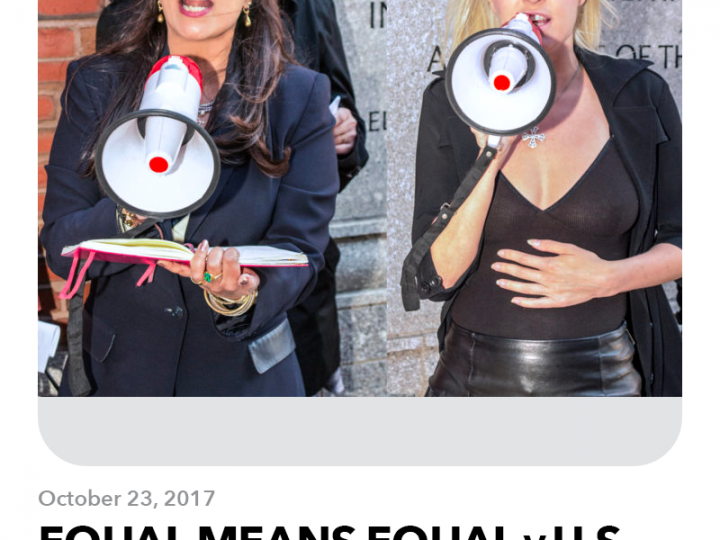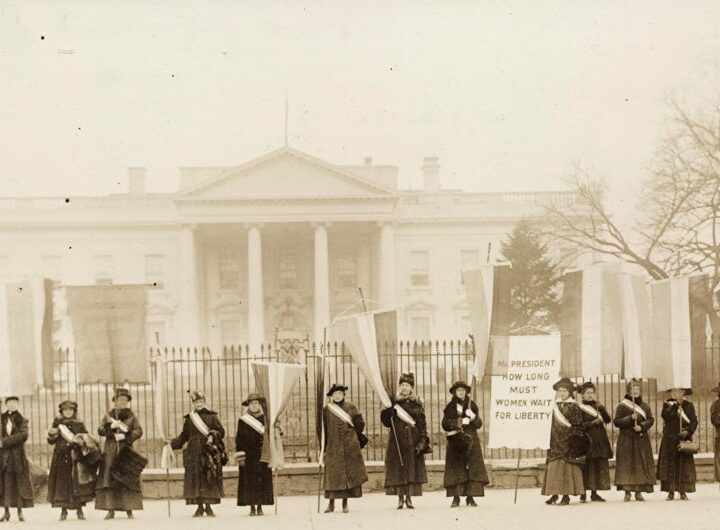
EQUAL MEANS EQUAL is appealing the April 21, 2026 decision in its federal lawsuit challenging the continued denial of full constitutional equality to women.
On August 3, 2026, EQUAL MEANS EQUAL filed its opening brief with the United States Court of Appeals for the First Circuit, asking the appellate court to reverse key portions of the District Court’s ruling in EQUAL MEANS EQUAL v. Donald J. Trump.
The case raises fundamental questions about the constitutional status of women in the United States — including the legal effect of the Equal Rights Amendment and whether laws that discriminate on the basis of sex should continue to receive less rigorous constitutional scrutiny than laws discriminating on the basis of race.
What the Case Is About
EQUAL MEANS EQUAL brought this lawsuit challenging the constitutionality of the Military Selective Service Act, which historically required men — but not women — to register for the military draft.
The lawsuit does not advocate for the draft.
It challenges a legal system in which women can be excluded from an obligation of national service on the basis of sex while simultaneously being denied full constitutional equality.
The case argues that women are entitled to equal constitutional status on two independent grounds: the Equal Rights Amendment and the Equal Protection guarantees of the United States Constitution.
The Equal Rights Amendment
The Equal Rights Amendment states:
“Equality of rights under the law shall not be denied or abridged by the United States or by any State on account of sex.”
Congress proposed the ERA in 1972. Thirty-five states ratified it before the extended ratification deadline expired in 1982, leaving the amendment three states short of the 38 required by Article V of the Constitution.
A decade later, an extraordinary development changed the legal landscape. In 1992, the 27th Amendment — originally proposed by James Madison in 1789 — was added to the Constitution after a ratification period of 203 years.
That development gave rise to what became known as the Three-State Strategy for the Equal Rights Amendment. The strategy was originally developed through the ERA Summit, a volunteer coalition organized in Washington, D.C. in 1992. Early advocates included U.S. Representative Robert Andrews, Barbara Irvine of the Alice Paul Centennial Foundation, Flora Crater of the Virginia Equal Rights Amendment Ratification Council, and Allie Hixson of the Kentucky ERA Alliance.
The legal rationale underlying the strategy was subsequently developed by Allison Held, Sheryl Herndon, and Danielle Stager, then law students at the T.C. Williams School of Law.
Their analysis argued that the ERA remained legally viable and properly before the states. Because the ERA’s ratification deadline appeared in Congress’s proposing clause rather than in the text of the amendment ratified by the states — and because the Constitution had just recognized an amendment ratified over the course of 203 years — they argued that the existing 35 ERA ratifications could remain valid and that ratification by three additional states could complete the constitutional requirements of Article V. Their analysis was published in the William & Mary Journal of Women and the Law in 1997.
Beginning around 2012, EQUAL MEANS EQUAL made the decision to put the Three-State Strategy into action, undertaking a sustained national campaign to secure the remaining state ratifications.
That campaign succeeded.
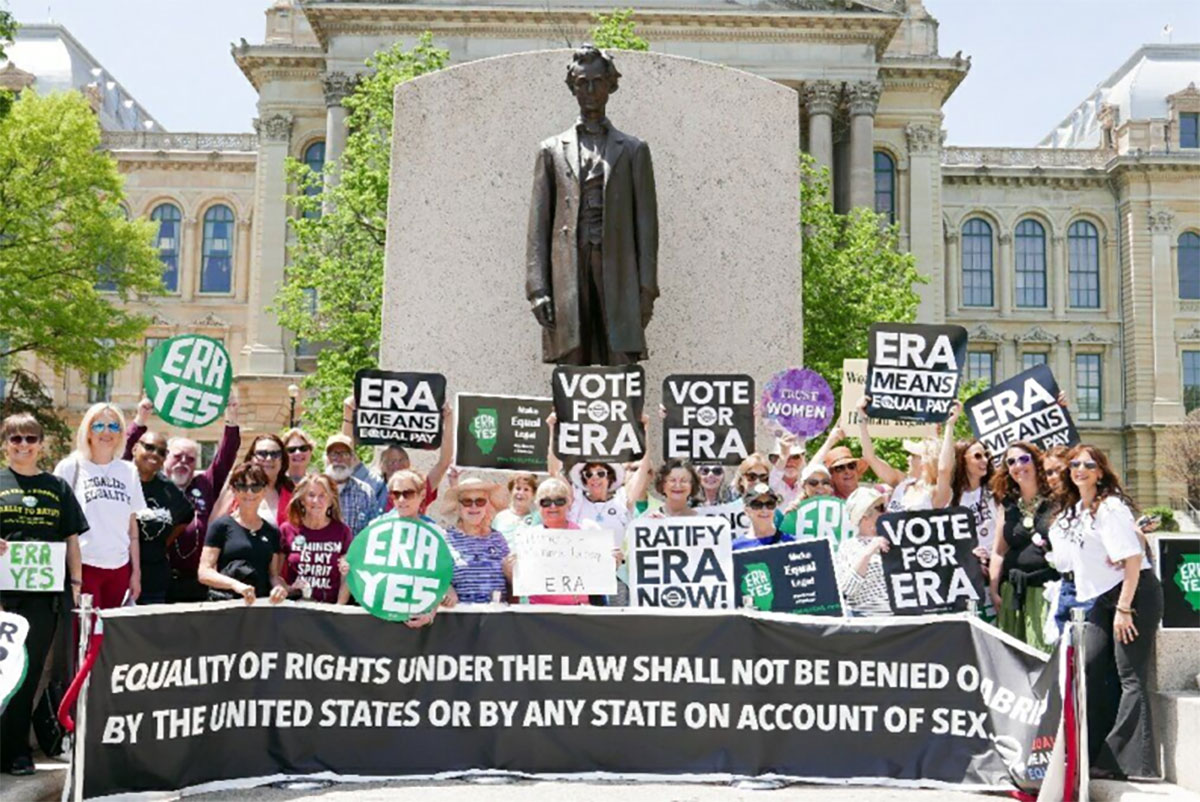
Nevada became the 36th state to ratify the ERA in 2017, Illinois became the 37th in 2018, and Virginia became the 38th in 2020 — bringing the ERA to the three-fourths of the states required by Article V.
The federal government has nevertheless refused to recognize the ERA as part of the Constitution, relying in part on the ratification deadline imposed by Congress.
EQUAL MEANS EQUAL argues that Article V gives Congress the power to propose constitutional amendments but does not authorize Congress to impose a binding deadline on state ratification.
The appeal therefore asks the First Circuit to address the constitutional validity and legal effect of that deadline.
Equal Protection and Sex Discrimination
The appeal also challenges the different constitutional standard courts apply to sex discrimination.
Under current Supreme Court doctrine, government discrimination based on race is generally reviewed under strict scrutiny, the Constitution’s most demanding standard of judicial review.
Sex discrimination, however, receives the lesser standard of intermediate scrutiny.
That distinction has enormous consequences.
It means that government discrimination against women can survive constitutional review under circumstances in which comparable discrimination based on race would not.
EQUAL MEANS EQUAL argues that this unequal constitutional framework cannot be reconciled with women’s equal status under the Constitution.
If women are equal, discrimination against women should receive the same rigorous constitutional scrutiny afforded other forms of constitutionally prohibited discrimination.
The District Court Decision
On April 21, 2026, United States District Judge William G. Young issued his decision in the case.
The court rejected EQUAL MEANS EQUAL’s argument concerning the ERA ratification deadline and dismissed EME’s organizational standing.
At the same time, the court recognized that the individual woman plaintiff had standing to challenge sex discrimination under the Military Selective Service Act.
On the merits of that claim, however, the court concluded that it remained bound by the Supreme Court’s 1981 decision in Rostker v. Goldberg, which upheld male-only draft registration at a time when women were excluded from combat positions in the United States military.
The military has changed dramatically since Rostker was decided.
Women now serve throughout the Armed Forces, including in combat roles, command positions, and virtually every area of military service.
EQUAL MEANS EQUAL is asking the appellate court to confront the constitutional consequences of that changed reality.
Why This Appeal Matters
This case is about much more than Selective Service.
It asks a fundamental constitutional question:
Are women fully equal under the United States Constitution?
For generations, women have been required to fight discrimination one statute, one policy, and one lawsuit at a time because the Constitution has never been interpreted to provide them the same unequivocal protection against sex discrimination that it provides against other forms of discrimination.
The Equal Rights Amendment was intended to change that.
And even apart from the ERA, EQUAL MEANS EQUAL argues that relegating sex discrimination to a lesser constitutional standard perpetuates a legal hierarchy incompatible with genuine equality.
Women serve their country, support their families, participate in every part of civic life, and bear the responsibilities of American society.
Their constitutional rights should be no less complete.
EQUAL MEANS EQUAL.
The Appeal
EQUAL MEANS EQUAL filed its Opening Brief with the United States Court of Appeals for the First Circuit on August 3, 2026.
The appeal asks the court to address both the Equal Rights Amendment and the continued application of a lesser constitutional standard to sex discrimination.
READ THE APPELLANTS’ OPENING BRIEF
READ THE DISTRICT COURT DECISION
EQUAL MEANS EQUAL will continue to update this page as the appeal proceeds.